“Urban Green Connect”

The third and last workshop took place on 20th of February 2020 in Vienna (former Sophienspital – Apollogasse 19). This workshop was titled “Urban Green Connect” and organized by Alchemia-nova together with their subcontractor Ecofairbau (former Ecoforma). Architects, constructors, scientists, developers, urban planners and other stakeholders were invited.

The aim of this workshop was to support the internalisation strategies and possible replicability and to support a high dissemination level and a possible market penetration.

Alchemia-nova presenting the Green INSTRUCT project at the “Urban Green Connect” Workshop

There was a possibility for people to use the open stage for a five-minute speech about their experience and knowledge with urban greening. Finally, twelve people from different fields joined the workshop: five architects, two landscape architects, two people from the city administration of Vienna (MA22 environmental protection and administration of the 7th district) and three people from the university of life sciences. Discussions regarding healthy living spaces and influences of environmental factors on human health have took place during the session. Results of the air quality measurements relating to the green panels that they did for the GI-project were also presented. Furthermore, Alchemia-nova brought out the possibilities of implementing nature-based solutions and circular economy in cities and presented the Green INSTRUCT project as a possible solution.

Heinz Gattringer from Alchemia-nova explaining the function of the green wall panel from the Green INSTRUCT project

A big focus was on the green wall which was shown by using a prototype for demonstration purposes to explain the function for greywater treatment.

Towards the end, there was a workshop where the possible drivers and barriers of the Green INSTRUCT panel were discussed with a focus on market penetration strategies including internationalization strategies and possible regional replicability.

Green Instruct: Month 37 Project Meeting Review

From October 22nd – 24th, members of the GREEN INSTRUCT consortium met in Naples, Italy for the month 37 project progress review.

Beginning on October 22nd, project partners evaluated the project review report, deliverable and financial updates, future work required between work packages and a list of actions for each partner for specific work package progression. As the final report submission lies 6 months from now (May 2020), it was therefore vital for the project coordinator to address all issues previously identified and verify that all actions have been accomplished.

Demo site visit and workshop

On October 23rd, after the project meeting, a demo site visit to Benevento was organise d together with the project RE4 (Reuse and Recycling of CDW materials and structures in energy efficient pREfabricated elements for building Refurbishment and construction). On site, panel features were checked, monitoring sensors were examined and differences with the demo site in Seville were discussed. Both projects were explained to all partners and the commonalities and differences between both were analysed.

On October 24th, both RE4 and Green Instruct projects were part of a workshop called “Sustainable Constructions: Solutions from Circular Economy” – part of the SAIE Bari Event. University of Brunel, NTUA, Cool Haven and Exergy all presented their contributions, comments and results from the Green Instruct panel.

Demo site panel

BIM in circular construction

Nina Turull, from Exergy, was part of a panel discussion on, “The benefits of BIM in a circular construction process”. Nina presented the innovative Stacker Mobile App and highlighted its innovative process in the Green Instruct panel. Digital tools such as Stacker will allow sustainable panels such as Green Instruct to enhance their efficiency, applicability and replicability along the construction process. Stacker is a digital tool that aims to improve management and communication during the installation of products in construction projects, to ultimately reduce reworks, time, associated costs and thus, waste. 

Nina Turull explaining the benefits of BIM in circular construction

The Mobile App has been tested through the Green Instruct panel, which allowed Exergy to identify and analyse the main potentialities and limitations. The use of digital manufacturing such as Stacker will allow Green Instruct members to improve resource planning, optimise operational efficiency and the interface with ‘upstream’ clients. We thank all Green Instruct partners for their attendance to an exciting update on Green Instruct project progress.

Green INSTRUCT project at the UK-India Workshop on Valorisation of Construction and Industry Waste for Resilient Infrastructure

Green Instruct UK-India workshop

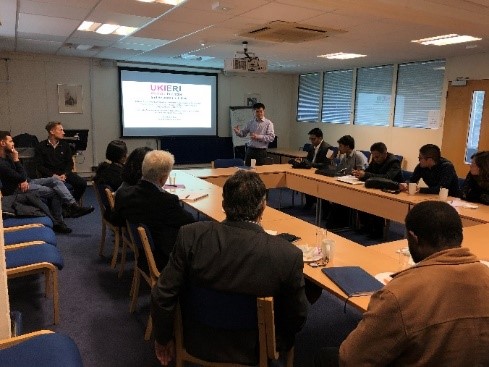
On Friday 18th October 2019, Brunel University London hosted a joint workshop on the Valorisation of Construction and Industry Waste for Resilient Infrastructure as part of their UKIERI-DST project with the Indian Institute of Technology Madras (IIT Madras) entitled ‘A New Framework of High-value Added Zero-waste Recycling of Concrete from Construction and Demolition Waste’. Over the course of one day, researchers from Brunel University London and IIT Madras presented and discussed their research experience, recent findings and the key challenges associated with construction and industry waste recycling to an audience of academics and students.

Green Instruct UK-India workshop

Prof Xiangming Zhou giving a presentation

green Instruct UK-India workshop

Dr Shaoqin Ruan from Brunel University London giving a talk

During the workshop, Prof Xiangming Zhou, co-ordinator of the Green INSTRUCT project, gave a presentation entitled “Valorisation of Construction & Demolition Waste into Energy Efficient Buildings – A Review of Green INSTRUCT project”, which summarised the latest research outputs of the Green INSTRUCT project. Dr Shaoqin Ruan, a Research Fellow with the Green INSTRUCT project from Brunel University London, also gave a talk about Sustainable Alkali Activation of Calcined Clay with Quicklime and Reactive Magnesia as a New Type of Concrete”. The talk was related with the use of additives such as reactive magnesia or quicklime to improve the mechanical performance of calcined clay.

The researchers from IIT Madras also gave compelling presentations on the current climate of construction and demolition waste recycling in India and their most recent research findings regarding the valorisation of recycled aggregates from waste concrete and its potential uses in road and pavement construction.

A round-table discussion was held following the presentations, initiating an excellent dialogue between the two institutions and providing an excellent platform to disseminate the knowledge of Green INSTRUCT project. The IIT Madras team have expressed strong interests of Green INSTRUCT project.

Mr Ram Venkataraman Guru from IIT Madras giving a talk

Green Instruct 37M Project Progress Meeting in Bari, Italy.

Green Wall Panel For the Green Instruct Project

The consortium will meet in Naples to review project progress, followed by a demo site visit to Benevento and the workshop “Sustainable Constructions: Solutions from Circular Economy”, in Bari. 

October 2019 will see an exciting few days as partners meet for month 37 of the Green INSTRUCT project.

Discussions will begin on October 22nd in Naples, Italy, where the consortium will review project progress alongside technical and scientific details for future Green Instruct strategies. Partners will have the opportunity to present work package, deliverable and financial updates from 36M, including green wall development, validation of panel integration and a review of LCA-LCC progress. This will allow other members of the consortium to share comments and suggestions, discussing the direction dissemination activities will take, alongside actions required for the progression of demo activities, measurements and data analysis over the next 6 months.

Following on from Naples, partners will travel to the demo site in Benevento on the 23rd. The demo site will host “The Green Instruct Panel” which will check panel features, the site monitoring, discuss material technical specifications and draw comparisons with the second demo site in Seville (visible in image below). The difference between demo sites (present in their system assembly) will give partners a better understanding of the progress Green Instruct technology is making and where potential changes could be made to optimise processes, reduce financial costs and increase efficiency.

The consortium will then move to a workshop in Bari, Italy as part of the SAIE Bari event, on the 24th of October 2019. The workshop is titled “Sustainable Constructions: Solutions from Circular Economy” and will run from 9am to 2pm. Within the workshop, discussions will be held on three main topics: 1) Circular Success Stories (RE4 project and Green Instruct project), 2) Technical Solutions – Circular Economy in Practice (Construction and Demolition Waste Recovery Process, new sustainable construction materials and components and solutions tested in real environments) and 3) Circularity for Sustainable Solutions.

Both the demo site visit and the Bari workshop will be shared with the RE4 project meeting,  making it of great importance that as many project partners attend as possible. This collaborative Green Instruct meeting, in month 37, will be a fantastic opportunity to exchange ideas, improvements and updates on progress within the consortium.

To find out more about the SAIE Bari event, please see the link below.

http://www.saiebari.it/en/digitalizzazione-bim/

Green Instruct partners gather at the comparison demo site, based in Seville.
Green Instruct partners seen on their visit to Seville demosite.

Leitat workshop: “New Materials and Technologies for Energy Efficient Building”

Mauro Manca Leitat workshop Barcelona Green Instruct

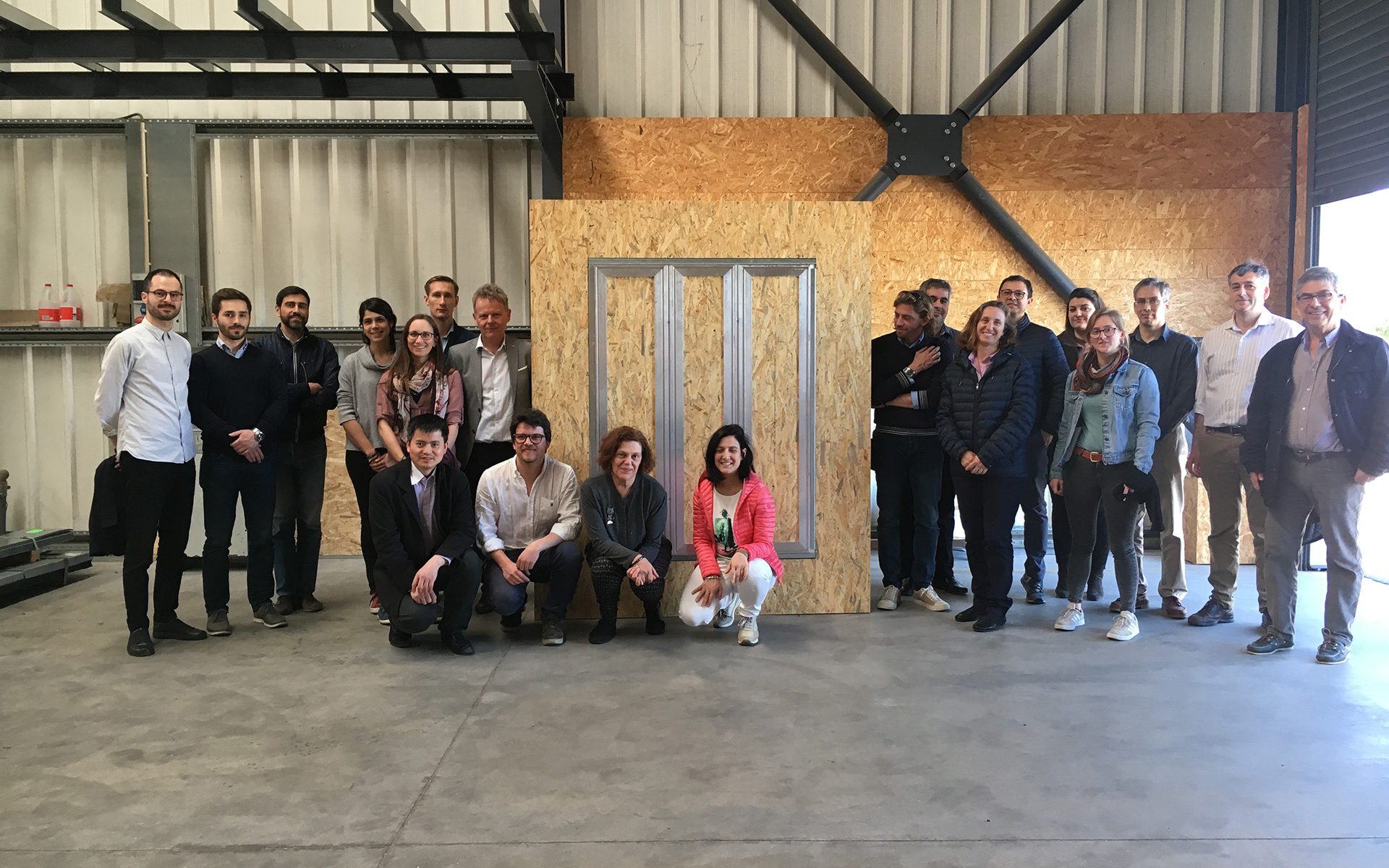
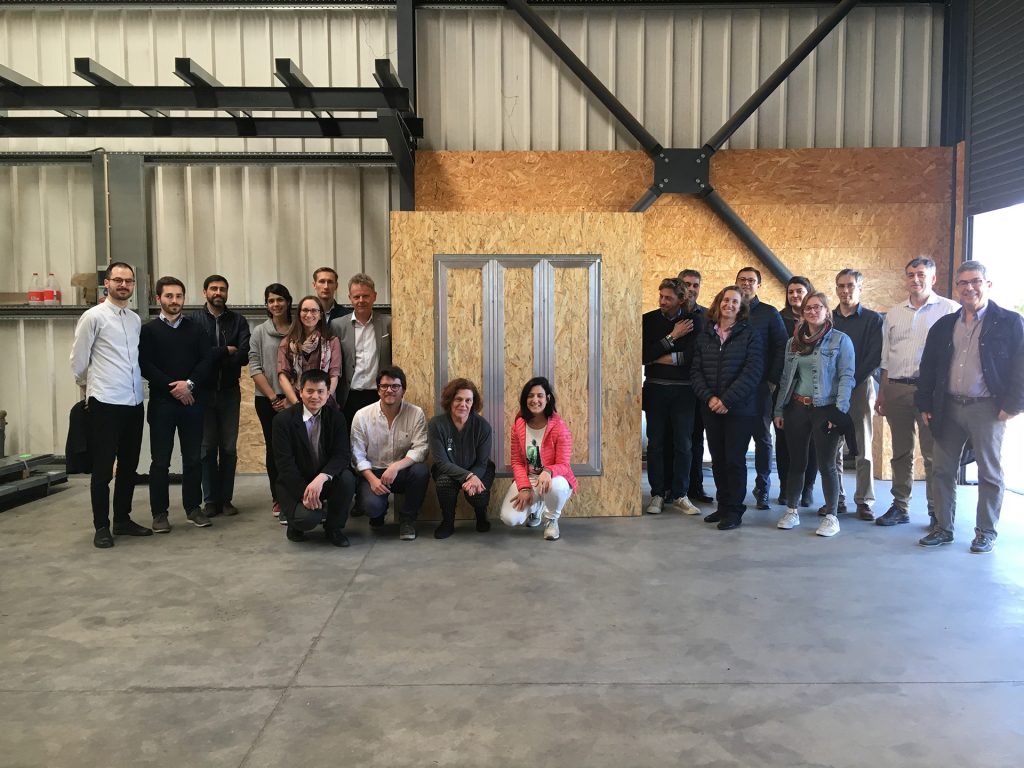
The 15th of May 2019 saw Green INSTRUCT partners gather in Barcelona for the workshop entitled “New Materials and Technologies for Energy Efficient Building”. The event – organized by Leitat in month 32 of the Green Instruct project – saw a variety of presentations on the recent advances in building technologies, construction materials and financial strategies.

As a project, Green Instruct focuses on the development of a building block prototype providing acoustic and thermal insulation, integrating green wall technology. Aspects of storm water management, energy and resource efficiency and cost-effective design give the Green Instruct developments a competitive advantage in a rapidly advancing sector.

This considered, the first speaker of the workshop, Mauro Manca from Piarchitects, discussed the importance of design in the formation of a cost-benefit model for sustainable architecture. Manca discussed the root of energy consumption, proposing it as a way the user can achieve a comfort the building is otherwise unable to supply. Overcoming unnecessary consumption therefore requires the consideration of user needs in the very first stages of the design process, alongside environmental influences that may affect levels of user comfort. It is suggested that the quantification of energy usage between rooms would allow construction of a building able to adapt to user comfort requirements.

Globally, ‘comfort’ is linked to ideas of luxury, health and satisfaction and by emphasizing the way in which design can achieve comfort through responding to user needs, the Green Instruct project encourages change within the landscape of sustainable architecture. Quantifying this process allows the construction of a profitable business model and demonstrates the financial savings possible in a user-centered approach. Changing the perception of ‘sustainability’ from simply being ‘environmentally friendly’ to something that achieves higher levels of satisfaction amongst workers, people and clients will highlight the intrinsic value of sustainable buildings, construction and technologies. Through incorporating designs that seek to achieve an equilibrium between people and their environment, buildings that are interesting and of economic benefit will be created, helping to change the way sustainable architecture is framed within the construction industry.

To find out more about the workshop, please watch the video below.

Green Instruct M33 Meeting in Seville

Green Instruct partners gather at the comparison demo site, based in Seville.

The second review meeting for the Green Instruct project took place in the city of Seville, Spain. The event was hosted by one of the consortium member ACCIONA. During the meeting, the Green Instruct consortium presented the advancements of all work packages until M33. Furthermore, it was outlined the points on which the consortium would have to stress in the final stretch of the project. In addition to the review meeting, the consortium also had a chance to catch up and discuss further technical matters and view the demo site in Seville.

Green Instruct partners gather at the comparison demo site, based in Seville.

Harnessing the power of BIM for buildings as a circular product

render image of a panel in a BIM project

Due to mass urbanization our cities are increasingly faced with mass consumption and the pressure to become more resourceful as the population is set to exceed 5.5 billion by 2050. The construction sector has been chastised by many thinktanks, research centres and NGO’s as the leading polluter and waste creator. The construction industry alone accounts for nearly 40% of carbon emissions and is heralded as the leading sector to mass produce waste through construction and demolition waste (CDW). For instance, in the UK nearly 49 million tonnes of CDW is produced due to end-of-life activities, namely through demolition (DEFRA, 2015). Subsequently, diverting 90% of UK’s CDW into landfills.

Simultaneously after a long history of under-digitization, the construction industry is making a shift towards digitization and automation due to rapidly growing information and communication technologies such as BIM, 3D printing, blockchain, robotics, machine learning, drones, big data, the Internet of Things (IoT), predictive analytics, augmented reality, and gaming engines, to name a few. Often referred as Construction 4.0, the construction industry’s surrogate of Industry 4.0. These changes into digitalisation have been propounded to transform the design, planning, construction, operation and maintenance of buildings and have a positive impact on the overall project time, cost, and resources. Yet there exists a paucity of digital transformation in construction to assist circular consumer knowledge.  This quintessential transformation from BIM data, into information and finally into circular consumption knowledge is presently missing in Construction 4.0. As pace of construction sector is set to grow by 85% globally, circular re-use business model will similarly need to be embedded into new buildings from the outset of the building design stages.

Against this backdrop the requirement for more circular design thinking and digitalisation through technologies such as BIM can pave the ways for incremental step changes to embrace end-of-life strategic design decision making (Akanbi et al., 2017). Such herculean efforts to make the design decision making more circular also requires close collaboration and coordination between originators of the design and construction material manufacturers.

At the heart of contemporary self-professed green buildings lies an emblematic problem – How can we eliminate waste from the design and propagate a more circular consumption at the end-of-life? Whilst, at the heart of circular economy lies the perennial question – How can we maximise our resources life span?

To address this growing problem an end-of-life strategy is commonly used in conjunction with construction disassembly or deconstruction, which is gaining in popularity viz-a-viz demolition. Underpinning such methods of construction disassembly is circular economy thinking (COM, 2014). Circular economy design thinking exceeds the confines of previous low-grade recycling of building materials at the end of its life.

Yet, limited exemplars of building components that re-use CDW holistically and support circular design thinking exist. In addition to such, few offer BIM content to inform the designers of its end-of-life strategy for disassembly. Subsequently the Green Instruct innovative insulated wall panel which is designed to comprise of over 70% of CDW will also consider an end-of-life strategy to combat the ill addressed problem of CDW and circular design thinking. Green Instruct panel has been designed with BIM and will also seek to address the problem of information transformation into end-of-life knowledge. Green Instruct project hopes to gather preliminary data about ease of disassembly of the GI Panel and embed such data into the BIM object of the GI panel. In an unprecedented manner, this BIM component of GI panel is hoped to embedded circular design thinking to better inform design decision making of architects and ease disassembly of the panel at the end of its useful life.

render image of a panel in a BIM project

Render of the Green Instruct panel in a BIM project

From an economic system standpoint, our traditional economic modus operandi of “take-make-dispose” will manifest a resource-scarce future for manufacturers. In this context, circular economy presents an alternative economy model that is regenerative by design (Ellen MacArthur Foundation, 2012).  Such has been the thinking behind the use of BIM for GI panel, to encourage designer awareness of the circularity of the specified building product. It is the ambition of Exergy to test the ease of disassembly and to digitise such valuable information into the design models via BIM. Subsequently, GI panel encourages manufactures to design longevity and performance into products for improved durability, efficiency and adaptability, decrease the use of raw material cost and increasing business supply chain.  If successfully implemented, circular economy proposes to augment the traditional modus operandi of the one-way consumption mindset and convert it into a servitization model instead, in a way that product ownership belongs to manufacturers that operate as a service provider rather than just consumer sellers.

Akanbi L. A., Oyedele L. O., Akinade O. O., Ajayi A. O., Delgado M., D., Bilal M., Bello S. A., (2017) Salvaging building materials in a circular economy: A BIM-based whole-life performance estimator,Resources, Conservation and Recycling, Vol. 129,pp. 175-186, DOI: https://doi.org/10.1016/j.resconrec.2017.10.026. 

DEFRA Department for Environment, Food and Rural Affairs, UK Statistics on Waste (2015) Available at: https://www.gov.uk/government/uploads/system/uploads/attachment_data/file/487916/UK_Statistics_on_Waste_statistical_notice_15_12_2015_update_f2.pdf

Ellen MacArthur Foundation, 2012. Circular Economy. [Online]
Available at: www.ellenmacarthurfoundation.org

Green Instruct Meeting 30M Project Update at Coimbra, Portugal

Green Instruct Consortium partners in 30M project Meeting In Coimbra Portugal

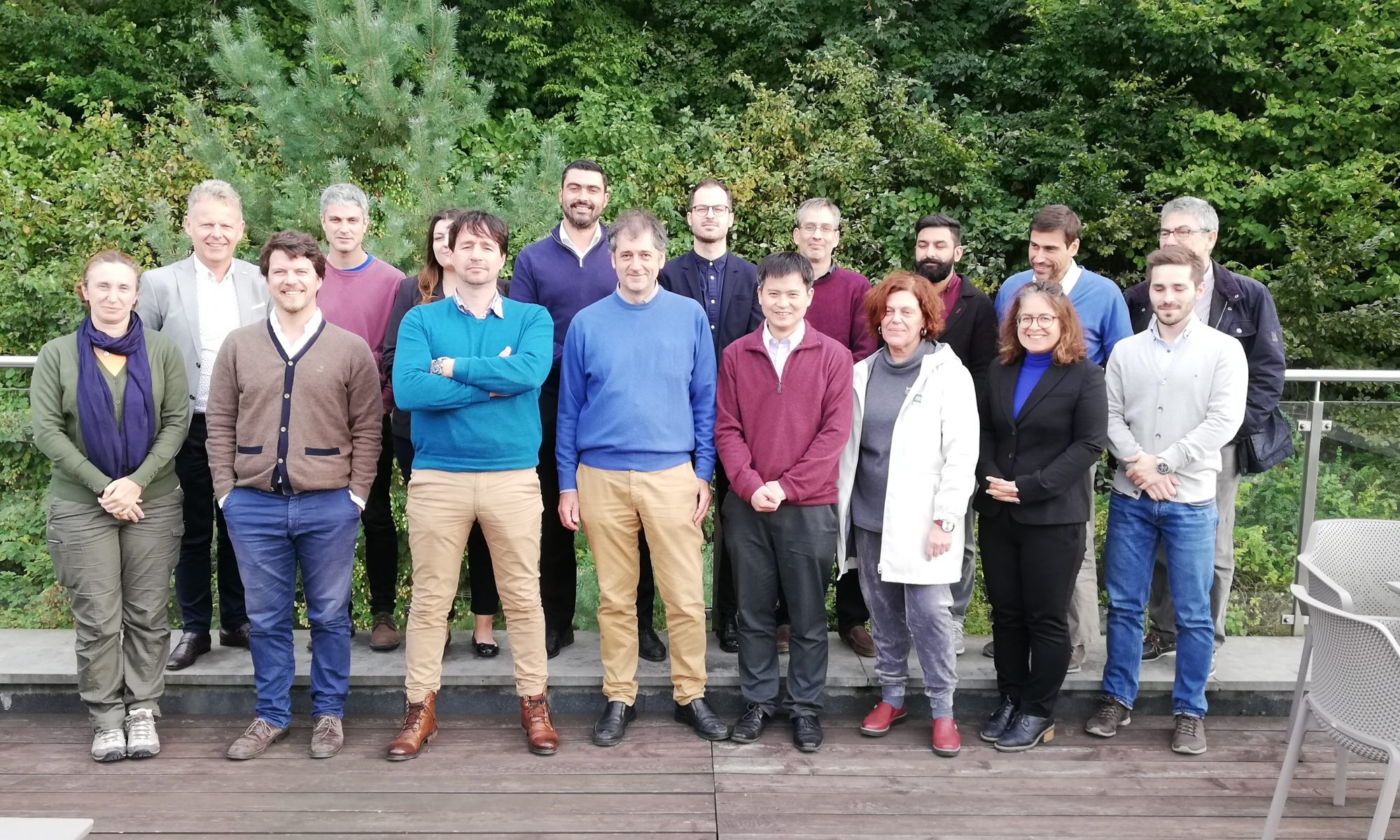
The Green Instruct consortium meeting was an oportunity to share the latest projects advancements and discuss the rest of the project’s roadmap. The venue was held in the city of Coimbra, Portugal on the 27-28th of March 2019.

The Green Instruct project is a Horizon 2020 funded project that focuses on researching new structure panels for energy efficient buildings. The prototype will provide acoustic and thermal insulation and it will contribute to on site grey and stormwater management, through the integration of a vertical Green Wall technology, providing additional functionalities.

During the meeting, the partners had a chance to visit the Cool Haven demo site and get a better understanding of one of the designs developed as part of the project.

Currently, as part of WP3, the consortium is working on developing the End of Life strategy for the panel (circularity of the materials and the treatment of these after their lifeuse) and how can be included in a BIM platform, where professionals in the construction sector like architects, builders, stakeholders, etc. would be able to know beforehand all the particularities of the panel (amount of material required, how this material can be processed afterwards, which design techniques are applied,…). This project is one of the examples of Circular Economy applied in the construction sector.

In the next stage, the consortium will be working on developing two additional demo sites based in Spain and Italy.

So far, the Green Instruct project has been moving according to its schedule due to the efficient collaboration between all partners.

Subscribe to our newsletter

To keep up with the latest developments, you can subscribe to the Green Instruct project here – https://www.greeninstruct.eu/news-and-events/

Green INSTRUCT 24M project progress meeting at NRGIA, Kazimierz Dolny, Poland

After working for 24 months, NRGIA hosted the Green INSTRUCT 24M progress meeting at Kazimierz Dolny, Poland on Wednesday 26 and Thursday 27 September 2018.

The Green INSTRUCT consortium partners discussed about the outcomes of the review meeting of the 1st Reporting Period and presented their action plan to address any comments from the Project Officer and the Reviewers.

Moreover, all the partners presented the progress of their tasks along with their workplan for the next 6 months. Extended discussions took place during the parallel discussion sessions, specifically around the demo panel dimension and structure which will allow the demonstration phase of the Green INSTRUCT technologies.

The Green INSTRUCT project has received funding from the European Union’s Horizon 2020 research and innovation programme under grant agreement No 723825.

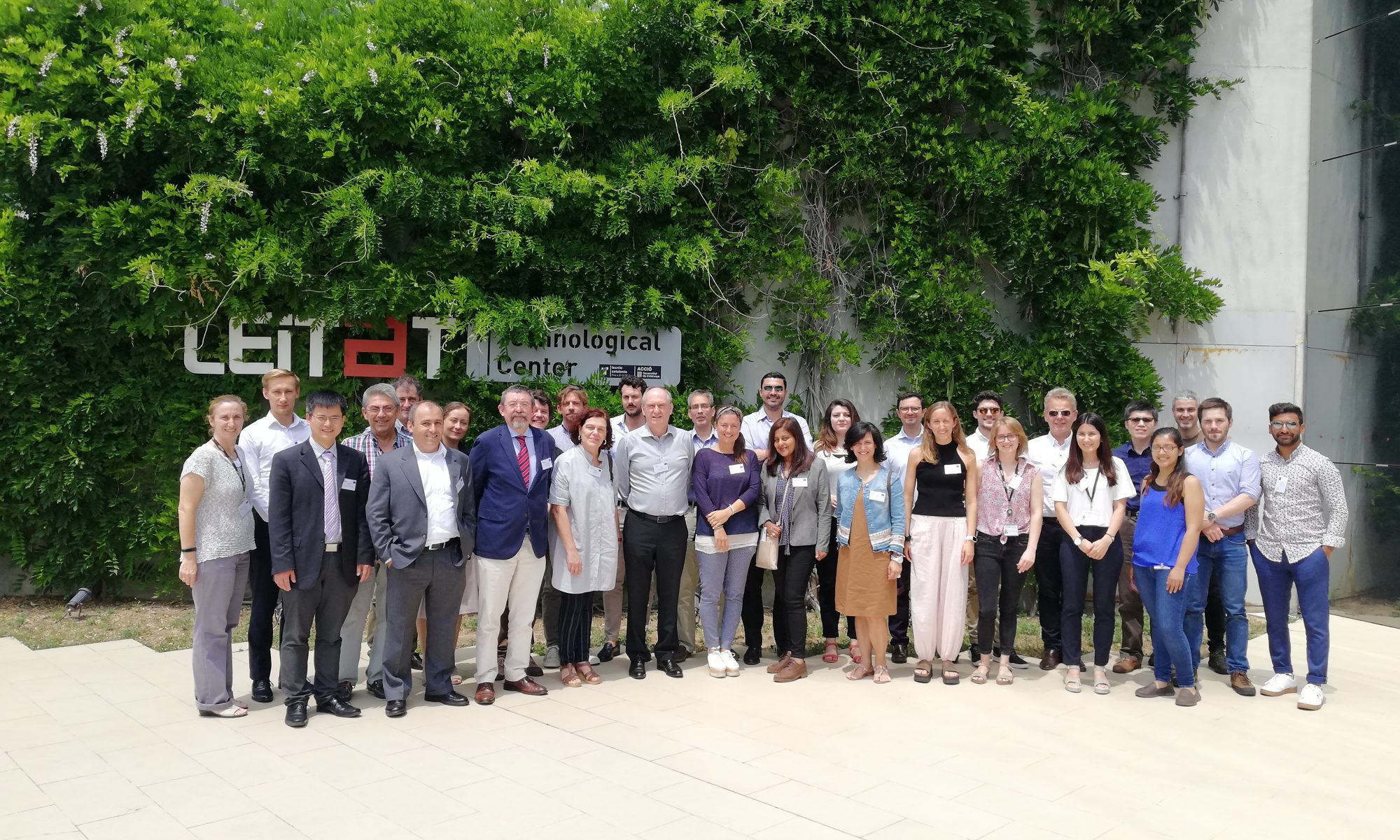
Green INSTRUCT 1st Review Meeting, LEITAT, Barcelona, Spain

Green INSTRUCT 1st Review Meeting, LEITAT, Barcelona, Spain

On Thursday, 28 June 2018, the Green INSTRUCT partners gathered in the premises of LEITAT in Barcelona for the 1st Project Review meeting by the EU. The Green INSTRUCT team presented in detail the work that has been done in the first 18 months of the project, demonstrating all the results, the facts and the achievements as these have occurred during the first 18 months of the project’s lifetime. The EU was represented by the Green INSTRUCT Project Officer, Mr. Carlos Saraiva Martins, together with 2 experts from the fields of the construction, civil and structural engineering.

During the day-long event the project work package leaders gave presentations on the work and accomplishments of their teams (task leaders), and the evaluators provided valuable and insightful comments on the progress of the project and potential ways to improve it.

dav

The first impression of the Green INSTRUCT team after the review completion was that of satisfaction and recognition of the excellent work done so far, of course with some warnings and potential risks. It has been a well selected team of reviewers who were able to recognize and acknowledge the work done and at the same time point at some issues that they consider evident risks to the project and provided advice for future improvement. At the same time, the commitment of the different partners all along the project half-life, but also during the review preparation was excellent, leading to important achievements, and a comprehensive defense of them in front of the Project Officer and the EU experts.

The same direction follows also the official Green INTRUCT Review Report, which was sent by the EU side to the Green INSTRUCT coordinator, giving to the Green INSTRUCT consortium the green light to proceed towards the second half of the project!

The Green INSTRUCT project has received funding from the European Union’s Horizon 2020 research and innovation programme under grant agreement No 723825.